
Research on MBCL
Research on MBCL indicates beneficial effects on self-compassion, mindfulness and mental health. Four independent randomised controlled trials, together with qualitative and process studies, form a growing and increasingly differentiated evidence base.
Evidence of efficiacy of MBCL
A growing number of studies have investigated Mindfulness-Based Compassionate Living in clinical and non-clinical populations, in face-to-face groups and in adapted online or shorter formats.
The available research includes four independent randomised controlled trials, early feasibility studies, a qualitative study of participants’ experiences and several analyses exploring how MBCL may support change.
Some studies evaluated the full group-based MBCL programme, while others investigated shorter or online adaptations. The findings therefore offer different perspectives on the possible benefits of MBCL.
Early feasibility studies in clinical and online settings produced encouraging initial findings and paved the way for subsequent randomised controlled trials. In the study on recurrent depression, participants’ feedback was used to revise the MBCL programme before the adapted version was tested in the larger randomised trial.
Randomised controlled trials
MBCL following MBCT for recurrent depression
The most extensive study of the group-based MBCL programme involved 122 adults with recurrent depression who had previously participated in Mindfulness-Based Cognitive Therapy.
Participants were randomly assigned to MBCL in addition to treatment as usual or to treatment as usual alone. Compared with the control group, participants receiving MBCL reported:
- a greater reduction in depressive symptoms and ruminative brooding;
- increased self-compassion and mindfulness skills;
- and improved quality of life.
The effect on depressive symptoms was small but statistically significant. During the six-month follow-up, depressive symptoms continued to improve, alongside further improvements in self-compassion, mindfulness and quality of life.
Changes in self-compassion appeared to play a particularly important role in the reduction of depressive symptoms.
Schuling et al. (2020)
Online MBCL for people experiencing high self-criticism
A randomised controlled study conducted in Switzerland investigated an internet-based adaptation of MBCL in 122 adults who had referred themselves to the study and experienced high levels of self-criticism.
During the first eight weeks, the research team compared a self-guided online MBCL programme combined with care as usual with care as usual alone. After this period, the control group was also given access to the programme.
After eight weeks, participants in the intervention group reported, compared with those in the control group:
- fewer symptoms of depression, anxiety and stress,
- greater self-compassion and less self-criticism,
- greater mindfulness and satisfaction with life,
- greater self-esteem as well as less shame and fear of self-compassion.
The size of the differences between the groups varied across the outcomes, ranging from small-to-medium to large.
In the intervention group, the improvements were still present on average six months after random allocation. However, a controlled comparison was no longer possible at that point because the control group had also been given access to the programme after eight weeks.
The study also assessed a more severe form of self-criticism referred to as “Hated Self” in the questionnaire. This dimension includes self-hatred, disgust towards oneself and hostile reactions towards oneself. During the first eight weeks, this score decreased more in the intervention group than in the control group. Within the intervention group, the change was still present at the follow-up assessment.
This finding should nevertheless be interpreted with caution. The two groups already differed in their Hated Self scores before the programme began. In addition, the scale proved less reliable in this sample than in previous studies. Further research is therefore needed to confirm this result.
The findings suggest that a structured, self-guided online MBCL programme may reduce self-criticism and improve related outcomes over eight weeks. The study involved self-referred adults with high levels of self-criticism.
Krieger et al. (2019)
A brief online intervention based on MBCL
A smaller randomised study investigated a 15-day online intervention using practices derived from MBCL.
Initially, 118 adults were randomly allocated to an intervention group or a control group. However, only 50 participants completed all three assessments: 26 in the intervention group and 24 in the control group.
In the intervention group, both feelings of inadequacy and the more severe form of self-criticism known as “Hated Self” decreased after the 15-day intervention. The control group showed no statistically significant changes in either form of self-criticism.
The Hated Self score, which reflects self-hatred, disgust towards oneself and hostile reactions towards oneself, had not increased significantly again at the two-month follow-up. This is noteworthy because this form of self-criticism is considered relatively difficult to change through brief interventions.
Self-compassion also increased in the intervention group. However, the control group also reported greater self-compassion at the follow-up assessment. It is therefore not possible to conclude with certainty that the online intervention alone accounted for this change.
Because the final sample was small, the attrition rate was high and the non-clinical sample consisted predominantly of young women, the findings remain preliminary.
The study provides preliminary evidence that selected MBCL practices may reduce self-criticism when offered in a brief, self-guided online format.
Ondrejková et al. (2022)
MBCL for informal caregivers in palliative care
A randomised controlled trial in Turkey included 54 informal caregivers of people receiving inpatient palliative care. Participants attended a shortened MBCL programme consisting of two sessions per week over four weeks.
Compared with the control group, caregivers receiving MBCL reported:
- less emotional exhaustion and depersonalisation;
- a greater sense of personal accomplishment;
- and increased self-compassion.
The study did not find a significant reduction in caregiving burden. Its findings nevertheless indicate that MBCL may support caregivers in dealing more constructively with the emotional demands of their role and reduce important aspects of burnout.
Kılıç et al. (2024)
How do participants experience MBCL?
A qualitative study interviewed participants from the randomised trial on recurrent depression about their experience of MBCL after completing MBCT.
Participants described MBCL as adding something important to their previous mindfulness training. In particular, they reported learning to approach painful thoughts, feelings and situations with greater kindness instead of automatically avoiding them or responding with self-criticism.
Four main themes emerged:
- a “container of kindness” that made it safer to approach difficult experiences;
- a greater willingness to stay with painful thoughts and emotions;
- empowerment, confidence and more active self-care;
- and a stronger sense of common humanity and connection with others.
Participants particularly valued being able to apply compassion practices directly during moments of intense distress.
Schuling et al. (2021)
How may MBCL support change?
Several studies have explored the processes that may contribute to the beneficial effects of MBCL.
Self-compassion
In the study on recurrent depression, increases in self-compassion and mindfulness and reductions in ruminative brooding were each associated with improvements in depressive symptoms.
When the researchers considered these processes together, changes in self-compassion appeared to play the most important role in the reduction of depressive symptoms.
This suggests that learning to respond to personal suffering with greater kindness and understanding may be a central process through which MBCL supports recovery.
Schuling et al. (2020)
Self-compassion and difficult emotions
When participants reported more self-compassion in one MBCL session, they tended to report less negative affect, such as distressing or unpleasant emotions, at the following session.
The reverse pattern was not found: experiencing fewer difficult emotions did not predict greater self-compassion at the next session.
These findings suggest that developing self-compassion may gradually change how participants experience and relate to difficult emotions.
Ter Avest et al. (2021)
Experiential avoidance and fear of self-compassion
A later analysis of the same trial found that MBCL reduced experiential avoidance and fear of self-compassion.
Experiential avoidance refers to attempts to escape, suppress or control difficult thoughts, feelings and bodily sensations. Reductions in experiential avoidance were associated with improvements in depressive symptoms and quality of life.
When the researchers also considered changes in self-compassion, self-compassion appeared to play the more important role. The findings indicate that MBCL may support participants in approaching difficult experiences with greater openness, kindness and emotional flexibility.
Scheepbouwer et al. (2025)
Limitations of current MBCL research
The current evidence is promising, but it remains limited in several important ways. The largest study of group-based MBCL was conducted at a single centre and compared MBCL in addition to treatment as usual with treatment as usual alone, rather than with an active psychological intervention. It therefore cannot fully determine whether the observed benefits were specific to MBCL or partly reflected receiving an additional structured treatment.
The six-month follow-up was not controlled because participants initially assigned to treatment as usual were subsequently offered MBCL. Continued improvements after the programme are encouraging, but they do not provide controlled evidence of longer-term efficacy. The study also assessed depressive symptoms rather than relapse or recurrence and therefore cannot establish whether MBCL prevents future depressive episodes.
Larger multicentre trials with active comparison groups and longer controlled follow-up periods are needed. Future research could also examine who benefits most, which processes are most important, and whether MBCL is most helpful after MBCT, as a stand-alone intervention or in other treatment sequences.
Schuling (2020)
Summary of the evidence
Across different studies, formats and participant groups, the most consistent finding is an increase in self-compassion.
Research also indicates that MBCL and interventions adapted from MBCL can:
- reduce depressive symptoms and psychological distress;
- reduce self-criticism, including more severe forms involving self-hatred and self-disgust;
- strengthen mindfulness and the ability to reassure oneself;
- improve quality of life and satisfaction with life;
- reduce experiential avoidance and fear of self-compassion;
- and reduce emotional exhaustion and other aspects of burnout in informal caregivers.
Not every outcome improved in every study. The findings vary according to the participants, the programme format and the outcome being measured. However, the studies consistently point towards the value of learning to meet suffering, stress and personal difficulty with greater awareness, kindness and compassion.
Taken together, the findings indicate that MBCL can strengthen self-compassion and mindfulness and contribute to improvements in mental health and well-being across different settings and participant groups.
Key mechanisms of change in MBCL
The growing body of research also provides an increasingly differentiated understanding of how MBCL supports change. In particular, the findings highlight the importance of self-compassion, a reduced tendency to avoid difficult experiences and a kinder, more constructive way of relating to painful emotions and oneself.
These findings help us understand more clearly how MBCL may support people in meeting stress, suffering and difficult emotions with greater awareness and compassion.
References
The references below correspond to the studies discussed on this page. For abstracts and links to the original publications, visit Articles on MBCL. Full texts are linked where they are freely available.
Doctoral thesis
Schuling, R. (2020). Compassion in Depression: Mindfulness-Based Compassionate Living for Recurrent Depression. Doctoral thesis, Radboud University Nijmegen.
Open-access full text
Randomised controlled trials
Krieger, T., Reber, F., von Glutz, B., Urech, A., Moser, C. T., Schulz, A., & Berger, T. (2019). An Internet-Based Compassion-Focused Intervention for Increased Self-Criticism: A Randomized Controlled Trial.
Schuling, R., Huijbers, M. J., van Ravesteijn, H., Donders, R., Cillessen, L., Kuyken, W., & Speckens, A. E. M. (2020). Recovery from Recurrent Depression: Randomized Controlled Trial of the Efficacy of Mindfulness-Based Compassionate Living Compared with Treatment-as-Usual on Depressive Symptoms and Its Consolidation at Longer-Term Follow-Up.
Ondrejková, N., Halamová, J., & Strnádelová, B. (2022). Effect of the Intervention Mindfulness-Based Compassionate Living on the Level of Self-Criticism and Self-Compassion.
Kılıç, D., Tosun Taşar, P., & Cengiz, M. (2024). The Effect of Mindfulness-Based Compassionate Living Training for Informal Caregivers of Palliative Inpatients on Burnout and Caregiving Burden: A Randomized Controlled Trial.
Feasibility, qualitative and process studies
Bartels-Velthuis, A. A., Schroevers, M. J., van der Ploeg, K., Koster, F., Fleer, J., & van den Brink, E. (2016). A Mindfulness-Based Compassionate Living Training in a Heterogeneous Sample of Psychiatric Outpatients: A Feasibility Study.
Krieger, T., Sander Martig, D., van den Brink, E., & Berger, T. (2016). Working on Self-Compassion Online: A Proof of Concept and Feasibility Study.
Schuling, R., Huijbers, M., Jansen, H., Metzemaekers, R., van den Brink, E., Koster, F., van Ravesteijn, H., & Speckens, A. (2018). The Co-Creation and Feasibility of a Compassion Training as a Follow-Up to Mindfulness-Based Cognitive Therapy in Patients with Recurrent Depression.
Ter Avest, M. J., Schuling, R., Greven, C. U., Huijbers, M. J., Wilderjans, T. F., Spinhoven, P., & Speckens, A. E. M. (2021). Interplay Between Self-Compassion and Affect During Mindfulness-Based Compassionate Living for Recurrent Depression: An Autoregressive Latent Trajectory Analysis.
Schuling, R., Huijbers, M. J., van Ravesteijn, H., Kuyken, W., & Speckens, A. E. M. (2021). Mindfulness-Based Compassionate Living: A Qualitative Study into the Added Value of Compassion in Recurrent Depression.
Scheepbouwer, V., Hanssen, I., Collin, G., Huijbers, M. J., Schuling, R., & Speckens, A. E. M. (2025). Mindfulness-Based Compassionate Living for Recurrent Depression: Examining Experiential Avoidance, Fear of Self-Compassion, and Positive Affect as Mediators of Response in a Randomized Controlled Trial.
Trial protocol
Schuling, R., Huijbers, M. J., van Ravesteijn, H., Donders, R., Kuyken, W., & Speckens, A. E. M. (2016). A Parallel-Group, Randomized Controlled Trial into the Effectiveness of Mindfulness-Based Compassionate Living Compared to Treatment-as-Usual in Recurrent Depression: Trial Design and Protocol.
MBCL Blog
Kindfulness
"Contemporary scientific knowledge solidly affirmsthat kindness and compassion are to the brainwhat the breath is to life." In the end of the 70s, like all young men in the Netherlands, I had to join military service for some time. I had just started to meditate and...
Self-compassion for men – The courage to be authentic
I had been living in South-East Asia as a Buddhist monk for about 6 years. When I came back to Europe in 1988 I fell into a strong culture shock and identity crisis. I remember one of the things that really supported me was reading a book by Guy Corneau: ‘Absent...
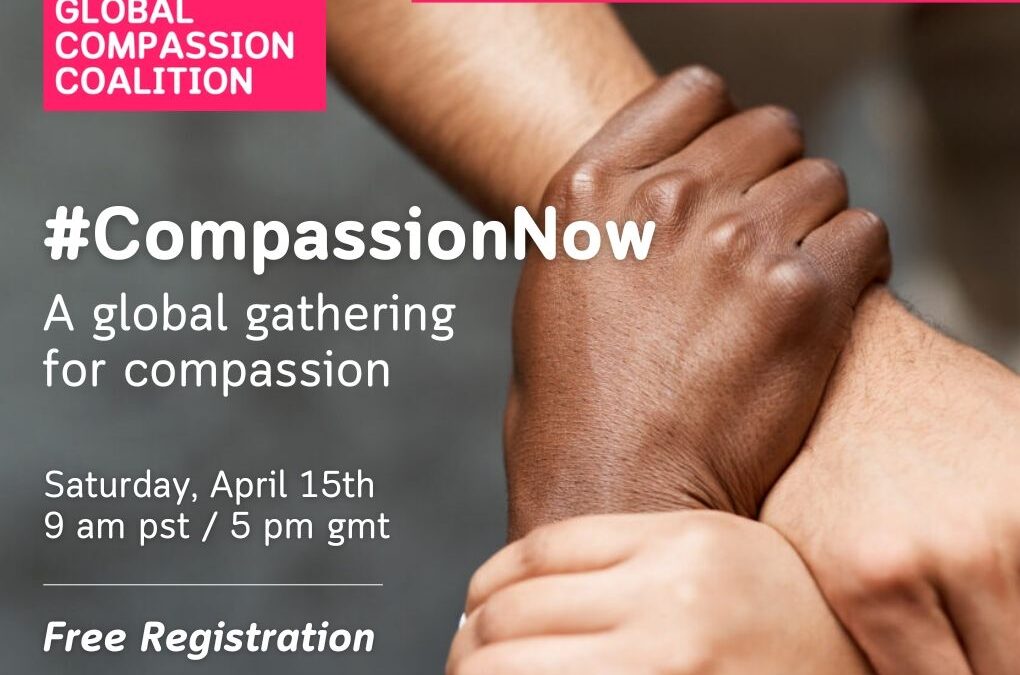
#CompassionNow – Launch of the Global Compassion Coalition
On 15th April 2023 this exciting new movement was launched. The Global Compassion Coalition gatheres all those who want to live in a world that’s based on compassion. Together with speakers like Marianne Williamson, Mpho Tutu, Jack Kornfrield, and Ruby Wax, we...